Published April 13, 2026
Your First Florida Pool — Welcome to Pool Ownership
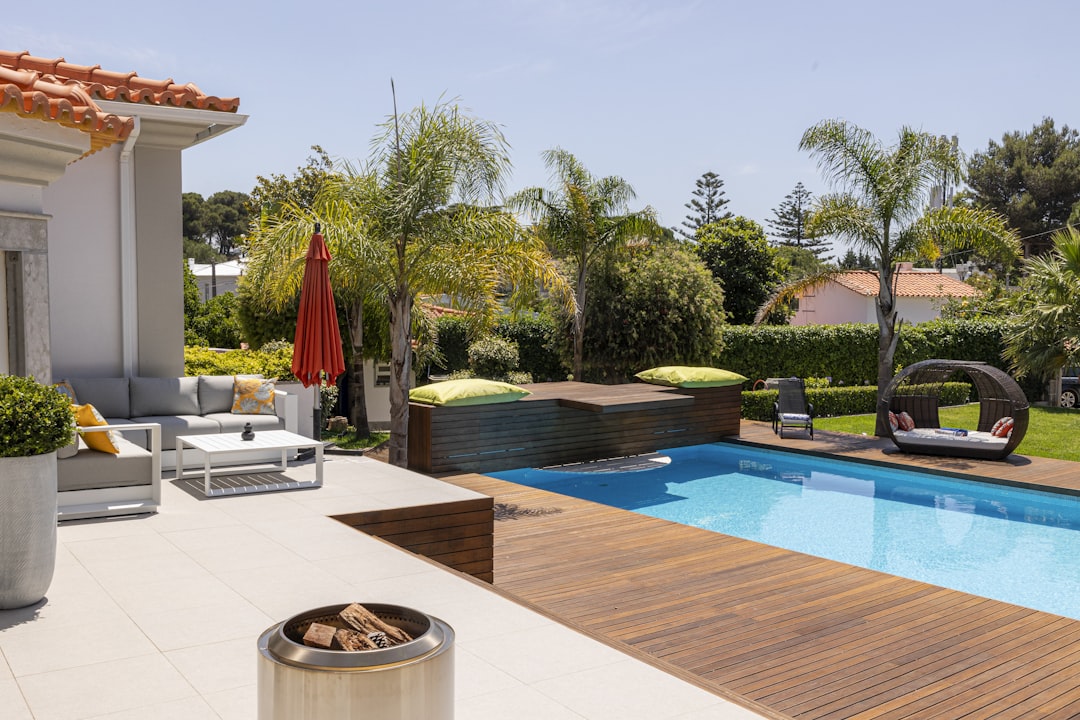
Roughly 35% of homes in Tampa Bay have a pool. If you're relocating from a state where pools are a luxury, you may be getting your first one — and pool ownership in Florida is a completely different animal than anywhere else.
Florida pools run year-round. Not "technically could use them" year-round — people actually swim in them 10–11 months of the year. That means 10–11 months of chemical balancing, cleaning, and maintenance. The Florida sun grows algae at an astonishing rate. One missed week of pool care in July and you'll come home to a swamp.
The good news: once you dial in the routine (and the right tools), maintaining a Florida pool takes about 20–30 minutes per week. Here's everything you need to get started, from essential equipment to nice-to-have accessories that make pool life better.
Essential Pool Equipment — The Non-Negotiables
Robotic Pool Cleaner
Dolphin Nautilus CC Plus Robotic Pool Cleaner
A robotic pool cleaner is the single best investment you'll make as a Florida pool owner. Drop it in, press a button, and it scrubs the floor, walls, and waterline while filtering debris independently of your pool's filtration system. The Dolphin Nautilus CC Plus is the sweet spot of price and performance.
- Cleans: Floor, walls, and waterline
- Cycle time: 2 hours
- Filtration: Fine-mesh filter captures particles down to 2 microns (algae-level)
- Price: $700–$900
- Florida note: Florida pools accumulate leaves, pollen, sand, and algae constantly. A suction-side cleaner (the kind that hooks into your pool plumbing) can't keep up. Robotic cleaners do the job better, and you don't have to touch the pool while they work.
Budget alternative: Dolphin E10 Robotic Pool Cleaner — Floor-only cleaning at about half the price ($350–$500). Doesn't climb walls but handles the basics.
Water Testing Kit
Taylor K-2006 Complete Pool Water Test Kit
Skip the test strips. They're inaccurate enough in Florida's heat to cause you to over- or under-treat your pool, which creates bigger problems. The Taylor K-2006 is what pool professionals use — it tests for free chlorine, combined chlorine, pH, alkalinity, calcium hardness, and cyanuric acid (CYA). All of these matter in Florida.
- Tests: Chlorine (free/combined), pH, alkalinity, calcium hardness, CYA
- Type: Reagent-based (liquid drop test — more accurate than strips)
- Price: $60–$80
- Florida note: Cyanuric acid (CYA) testing is critical in Florida. CYA stabilizes chlorine against UV breakdown, but too much CYA (common in Florida pools that use stabilized chlorine tablets year-round) makes chlorine ineffective. The Taylor kit measures this; strips don't do it well.
Quick-check alternative: AquaChek 7-Way Pool Test Strips — Fine for quick daily checks between comprehensive Taylor tests.
Pool Skimmer Net
Professional Pool Skimmer Net Heavy Duty
A deep-bag leaf skimmer, not the flat surface skimmer that comes with most pool kits. Florida live oaks, palm trees, and magnolias dump leaves, seed pods, flowers, and fronds into your pool daily. A flat skimmer can't handle the volume. Get one with a telescoping pole.
- Type: Deep bag (holds more debris per scoop)
- Pole: Telescoping aluminum, 8–16 feet
- Price: $20–$40 (net) + $20–$35 (pole)
- Florida note: Skim daily during fall (live oak leaf drop is brutal in November–December) and during pollen season (February–April). Five minutes of skimming prevents an hour of filter cleaning.
Pool Chemical Starter Kit
Getting your chemicals right from day one saves you from expensive problems later. Here's what you need:
- 3-Inch Chlorine Tablets (Stabilized) — Your daily chlorine source. Use a floating dispenser or inline chlorinator, never toss tablets directly into the pool (they bleach the surface).
- Pool Shock (Calcium Hypochlorite) — Weekly shock treatment to kill algae and bacteria. In Florida, shock weekly — not biweekly like northern pool guides suggest.
- Muriatic Acid — Lowers pH. Florida fill water tends to run high pH, and evaporation (heavy in Florida heat) concentrates minerals and raises pH. You'll use this regularly.
- Sodium Bicarbonate (Baking Soda) for Alkalinity — Raises alkalinity when it drops. Low alkalinity causes pH to bounce wildly.
- Pool Algaecide — Preventative dose weekly during summer. Florida's combination of heat, sun, and rain creates ideal algae growth conditions. Don't wait until you see green.
- Cyanuric Acid (CYA / Stabilizer) — Protects chlorine from UV breakdown. Florida sun destroys unstabilized chlorine within 2 hours. Target 30–50 ppm.
Pool Safety Equipment
Florida law requires pool barrier safety (fence, screen enclosure, or door alarms) for residential pools. Beyond legal compliance, these are genuinely important:
- Pool Alarm (Surface Wave Sensor) — Detects when something falls into the pool and triggers a loud alarm. Critical for families with kids or pets.
- Pool Safety Fence (Removable Mesh) — A mesh fence around the pool deck that prevents unsupervised access. Required by Florida code if your pool doesn't have a screen enclosure with self-closing doors.
- Self-Closing Pool Gate Hinges — If you have a gate in your pool fence or screen enclosure, it must self-close and self-latch by Florida law. Replace worn hinges immediately.
Nice-to-Have Pool Accessories
Solar Pool Cover
A solar cover (also called a "solar blanket") floats on the water surface and serves two purposes in Florida: it reduces water evaporation (you can lose an inch per week in Florida sun) and raises the water temperature 5–10 degrees during the cooler months. It also reduces chemical consumption by slowing chlorine loss to UV.
- Thickness: 12–16 mil (thicker = more durable and better insulation)
- Price: $30–$80 depending on pool size
- Florida note: Most useful from November through March when pool temps drop into the 60s–70s. During summer, Florida pools stay 85+ degrees naturally — you don't need additional heating.
LED Pool Lights
Night swimming is a Florida institution. Upgrading from the old halogen bulb to an LED color-changing light transforms your pool at night. Most LED pool lights are direct replacements for existing fixtures — no rewiring needed.
- Type: LED replacement bulb for standard pool light niche
- Colors: Multiple color modes and shows
- Lifespan: 30,000–50,000 hours
- Price: $50–$150
- Florida note: Doubles as landscape lighting — the glow from a colored pool light illuminates the entire lanai. Blue and cyan modes make the water look incredible.
Floating alternative: Floating Solar Pool Lights — Solar-charged and float on the surface. No installation needed, but less dramatic than in-wall LEDs.
Pool Floats (The Fun Stuff)
You're in Florida. You have a pool. Live a little.
- Frontgate Designer Pool Float — Comfortable enough to spend an afternoon on with a book and a drink.
- Pool Noodles (Bulk Pack) — Cheap, fun, and endlessly useful for kids and adults.
- Floating Drink Holder — Because carrying a drink while swimming is a problem that needed solving.
Pool Vacuum (Manual)
Even with a robotic cleaner, a manual vacuum handles targeted spots (like the area under your pool steps where the robot can't reach, or a debris pile after a storm). Connects to your skimmer line.
- Price: $30–$60 for the head and hose
- Florida note: Essential after storms. A hurricane or strong thunderstorm can dump enough debris into your pool that a robotic cleaner can't handle it in one cycle.
First-Time Pool Owner Checklist
Print this and tape it to the inside of your pool equipment cabinet:
Daily (2 minutes):
- Check pool water level (should be at mid-skimmer)
- Skim surface debris
- Check pump is running (most Florida pools run 8–12 hours/day)
Weekly (20 minutes):
- Test water chemistry (pH, chlorine, alkalinity minimum)
- Add chemicals as needed
- Shock the pool (evening — sun burns off shock quickly)
- Brush walls and steps
- Clean skimmer basket and pump basket
- Run robotic cleaner
Monthly (30 minutes):
- Full Taylor test (including CYA and calcium hardness)
- Clean or backwash filter
- Inspect pool equipment for leaks
- Check pool fence/screen enclosure doors for proper latching
- Add algaecide (preventative dose)
Seasonal:
- Have pool inspected by a professional annually ($100–$150)
- Check pool tile and coping for cracks
- Inspect the pool screen enclosure for tears (especially after storms)
- Drain and acid-wash every 3–5 years (professional service, $300–$600)
What to Skip
- Automatic chlorinators sized for northern pools — Florida pools need more chlorine due to UV intensity and heat. Size up or use a combination of tablet feeder and weekly shock.
- Pool heaters (gas or electric) — For 90% of Tampa Bay pool owners, a solar cover handles the 3–4 cool months. A gas heater costs $300–$500/month to run. Heat pumps are more efficient ($100–$200/month) if you must have heated water year-round. Pool Heat Pump is the better option if you want heating.
- Cheap test strips as your only testing method — they'll tell you something is "off" but not accurately enough to correct it properly.
- Non-variable-speed pool pumps — if your pool pump is old and single-speed, replacing it with a variable-speed pool pump saves $50–$100/month in electricity. Florida law now requires variable-speed pumps on new pool construction and replacements.
FAQ
How much does it cost to maintain a pool in Florida?
Budget $100–$200/month for chemicals and supplies (DIY maintenance). If you hire a pool service, add $100–$150/month for weekly cleaning and chemical management. Electricity to run the pump is another $50–$100/month. Total: $150–$450/month depending on how much you DIY. It's a real cost, but most Florida pool owners consider it well worth it.
Can I swim in my Florida pool year-round?
Most Tampa Bay residents swim March through November comfortably (water temps 78–88 degrees). December through February, water drops to 60–72 degrees, which is too cold for most people without a heater or heat pump. A solar cover helps but won't keep the pool at 80 degrees when air temps are in the 50s.
Do I need a screen enclosure over my pool?
You don't legally need one if you have an alternative pool barrier (fence, alarm, etc.), but screen enclosures are nearly universal in Tampa Bay for good reason. They keep out leaves, bugs, frogs, and bird droppings, dramatically reducing cleaning time. They also provide some UV shade and wind protection. Cost: $8,000–$20,000 for a new pool enclosure depending on size.
How fast does algae grow in a Florida pool?
Terrifyingly fast. In peak summer (June–August), an untreated pool can turn green in 24–48 hours. Even a properly treated pool can develop algae if chlorine drops below 1 ppm for a single day during hot weather. This is why weekly shock and algaecide are non-negotiable in Florida — you're fighting biology and thermodynamics simultaneously.
What's the first thing I should do when I buy a house with a pool?
Get a professional pool inspection ($100–$150, separate from the home inspection). Have them assess the equipment condition, surface integrity, and plumbing. Then test the water chemistry yourself with a Taylor kit and bring the chemistry into balance before swimming. Many pools sit poorly maintained during the selling process, and the chemistry can be wildly off.
Free Tampa Bay Relocation Guide
Get personalized neighborhood recommendations, cost comparisons, and insider tips from Barrett Henry — 23+ years of real estate experience.
Moving to Tampa Bay? Get a Local Expert.
Barrett Henry is a Broker Associate with REMAX Collective and over 24 years of real estate experience. Straight talk, smart strategy, no pressure.
Need Help Setting Up Your New Home?
Best Bay Services handles handyman work, home repairs, and maintenance for your new Tampa Bay home. Local, licensed, and trusted.
Keep Reading
Cost of Living in Tampa Bay: Comparing Lutz, Tarpon Springs, and Beyond
Compare housing, taxes, and expenses across Tampa Bay neighborhoods. Real insights on Lutz, Tarpon Springs, Channelside, and Hernando County.
May 10, 2026
Moving to Tampa Bay: Planning Your Relocation Across Hillsborough County
Expert moving guide for Tampa Bay relocation. Tips for Trinity, Winter Haven, Spring Hill, and Homosassa. By Barrett Henry, REALTOR®.
May 10, 2026
Tarpon Springs vs Tampa vs Channelside vs St. Petersburg: Where Should You Move?
Compare Tarpon Springs, Tampa, Channelside, and St. Petersburg. Find your ideal Tampa Bay neighborhood with this honest breakdown.
May 10, 2026
Questions & Answers
Have a question about this topic? Ask below and the community will help.
Sign in to ask or answer questions