Published April 13, 2026
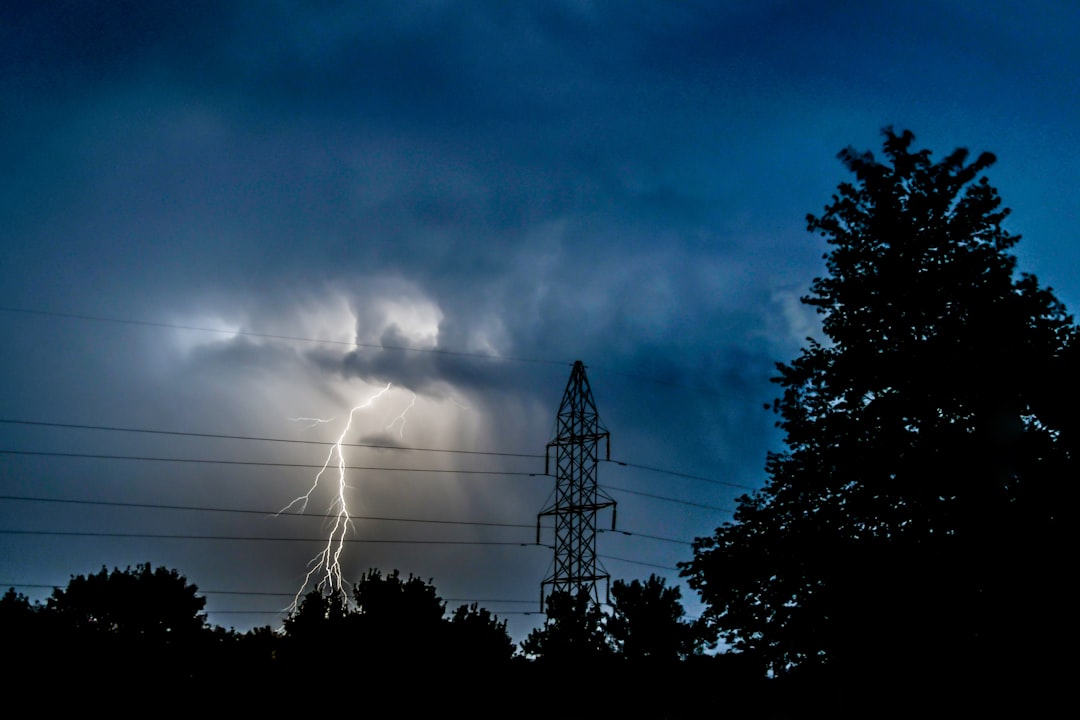
Florida is the lightning capital of the United States. Central Florida — including Tampa Bay — averages 80-100 lightning days per year. That's not a fun weather fact. That's 80-100 opportunities for a power surge to fry your TV, computer, router, or smart home system in a fraction of a second.
If you're used to plugging your electronics into a basic power strip from the dollar store, you need a new plan. A power strip is not a surge protector. And a basic surge protector might not be enough for Florida lightning.
Here's the layered approach that actually protects your stuff.
Why Basic Power Strips Don't Work in Florida
A power strip is just a splitter — it gives you more outlets but provides zero protection against power surges. Even many products labeled "surge protector" only handle minor voltage fluctuations, not the massive surges caused by nearby lightning strikes.
A direct lightning strike delivers up to 300 million volts. Your electronics operate on 120 volts. Even an indirect strike (lightning hitting a power line a mile from your house) can send a surge of thousands of volts through your wiring.
The key spec is joule rating — the amount of energy a surge protector can absorb before it fails. For Florida:
- Under 1,000 joules: Inadequate. Handles minor fluctuations but not storm surges.
- 1,000-2,000 joules: Minimum for Florida. Handles most indirect surges.
- 2,000-4,000 joules: Good protection for expensive electronics.
- 4,000+ joules: Best available protection for premium equipment.
Critical fact: Surge protectors are sacrificial. Each surge they absorb reduces their remaining capacity. A surge protector that's taken multiple hits over 2-3 Florida summers may have zero protection left even though it still powers your devices. Replace them every 2-3 years in Florida, or get ones with indicator lights that show protection status.
The Three-Layer Florida Surge Protection Strategy
Layer 1: Whole-Home Surge Protector
Installed at your electrical panel by an electrician. Catches the biggest surges before they enter your home's wiring. This is your first line of defense and the most important investment.
Layer 2: Point-of-Use Surge Protectors
Individual surge protectors at each group of electronics — entertainment center, home office, kitchen counter. These catch surges that slip past the whole-home protector or originate inside your home (from motors, compressors, etc.).
Layer 3: UPS (Uninterruptible Power Supply)
Battery backup units that keep critical electronics running during the brief power flickers and outages that happen during every Florida thunderstorm. They also include built-in surge protection.
Top Picks for Florida Lightning Protection
1. Eaton CHSPT2ULTRA Whole-Home Surge Protector (Best Whole-Home)
The Eaton CHSPT2ULTRA installs at your main breaker panel and provides the first layer of defense against lightning surges entering through your power lines. It handles up to 108,000 amps of surge current and includes both LED and audible indicators when protection is active.
Why it matters for Florida: This catches the big stuff before it reaches any outlet in your home. A nearby lightning strike that would normally send a devastating surge through your wiring gets absorbed here first. Every Florida homeowner should have one of these. Installation by an electrician runs $100-$200 on top of the $50-$80 product cost.
2. Siemens FS140 Whole-Home Surge Protector (Best Budget Whole-Home)
The Siemens FS140 is a more affordable whole-home option at under $50. It provides solid protection for most residential applications with a lower profile design that fits easily into your panel.
Why it works for Florida: If the Eaton is overkill for your budget, this Siemens unit still provides meaningful whole-home protection. Something at the panel is infinitely better than nothing.
3. APC SurgeArrest Performance Series (Best Power Strip Surge Protector)
The APC SurgeArrest Performance P12U2 provides 4,320 joules of protection, 12 outlets, and USB charging ports. It includes a "Protection Working" LED so you know it's still active. APC's $300,000 connected equipment warranty adds peace of mind.
Why it works for Florida: The 4,320-joule rating is significant. After absorbing multiple Florida storm surges, it still has meaningful protection capacity left. The protection indicator light is essential — in Florida, you need to know when your protector has given its life so you can replace it.
4. Tripp Lite TLP1208TELTV (Best for Home Entertainment)
The Tripp Lite TLP1208TELTV provides 12 outlets with 2,880 joules of protection, plus coaxial and telephone/ethernet surge protection. That last part is crucial — surges can enter your home through cable lines and phone lines, not just power outlets.
Why it works for Florida: Your TV, cable box, streaming device, and gaming console sit connected to both power and coaxial cable. A surge can come through either one. This protector covers both paths. If you have cable internet, the coax protection matters.
5. CyberPower CP1500AVRLCD UPS (Best UPS for Home Office)
The CyberPower CP1500AVRLCD provides 1,500VA/900W of battery backup with Automatic Voltage Regulation (AVR). When power flickers or drops during a storm — which happens multiple times per thunderstorm in Florida — the UPS switches to battery instantly, keeping your computer, monitor, and router running without interruption.
Why it's essential for Florida: Florida thunderstorms don't just cause full outages. They cause rapid power flickers — the lights blink 3-4 times before power stabilizes or goes out completely. Each flicker can corrupt data, crash your computer, or damage electronics. The AVR feature corrects voltage fluctuations without switching to battery, preserving battery runtime for actual outages.
6. APC BE600M1 UPS (Best Budget UPS)
The APC BE600M1 Back-UPS is a compact, affordable UPS that provides enough battery for your modem and router during brief outages. It won't run your desktop computer for an hour, but it'll keep your internet alive through those 30-second power flickers.
Why it works for Florida: At minimum, put your modem and router on a small UPS. During a Florida storm, power flickers reset your modem/router each time, and the reboot cycle takes 3-5 minutes. A small UPS prevents the flicker from reaching them, keeping your internet stable throughout the storm (until a real extended outage).
7. APC SurgeArrest Essential (Best Individual Outlet Protector)
The APC SurgeArrest Essential Single Outlet plugs into any outlet and provides basic surge protection for individual appliances. Use these for your refrigerator, washing machine, microwave, and other single-appliance outlets.
Why it works for Florida: Your refrigerator has a compressor. Your washer has a motor. These are expensive to replace when a surge kills them. A $15 single-outlet protector on each major appliance is cheap insurance.
8. Eaton Weather Resistant Whole-House + Cable/Phone/Ethernet (Complete Kit)
The Eaton Complete Home Surge Protection Kit includes the panel protector plus cable/phone/ethernet surge protectors for your service entrance. This covers every path a surge can take into your home.
Why it works for Florida: Lightning surges don't just come through power lines. They enter through cable TV lines, phone lines, and ethernet cables. A complete kit protects every entry point.
What to Skip
- Dollar store power strips — Zero surge protection. They're outlet splitters, not protectors.
- Old/expired surge protectors — If the protection LED is off or the unit is more than 3 years old in Florida, it's likely depleted. Replace it.
- "Smart" power strips without surge protection — Some smart/WiFi power strips prioritize app features over protection. Check the joule rating before buying.
- Surge protectors on GFCI outlets — Some surge protectors interfere with GFCI outlets (the ones with Test/Reset buttons in kitchens and bathrooms). If the GFCI keeps tripping, this might be why.
- Plugging surge protectors into surge protectors — "Daisy chaining" doesn't increase protection. It creates a fire hazard. Use one quality protector per outlet.
After the Storm: What to Check
After every significant lightning storm in Florida:
- Check protection indicator lights on all surge protectors. If any show "Protection Off" or the LED is dead, replace immediately.
- Test your UPS by pressing the test button. If the battery is failing, it won't protect you next time.
- Check your internet — if your modem/router died, a surge may have come through the cable line.
- Inspect your whole-home protector (or have your electrician check it annually).
- File insurance claims promptly if equipment was damaged. Florida homeowners insurance typically covers lightning damage, but you need to document it quickly.
FAQ
Do I really need a whole-home surge protector in Florida?
Yes. It's the single best electrical investment you can make in a Florida home. It costs $150-$250 installed and protects every circuit in your house from the largest surges. Insurance companies sometimes offer premium discounts for having one installed. Think of it as a seatbelt for your electrical system.
How often should I replace surge protectors in Florida?
Every 2-3 years, or immediately if the protection indicator light shows the protector is depleted. Florida's frequent lightning storms degrade surge protectors faster than anywhere else in the country. If a protector has absorbed several significant surges, its joule capacity is used up even though it still provides power to your devices.
Will a surge protector save my electronics from a direct lightning strike?
Probably not from a direct strike on your home, which delivers an enormous amount of energy. But direct strikes are rare. What surge protectors handle are the far more common indirect surges — lightning hitting a power line, transformer, or nearby structure and sending a surge through the grid to your home. This happens multiple times per storm season, and a good surge protector absorbs it.
Should I unplug electronics during Florida thunderstorms?
If you have whole-home surge protection plus quality point-of-use protectors plus a UPS, you're well protected for typical storms. For severe storms with frequent close lightning, unplugging sensitive electronics is the only 100% guaranteed protection. The most vulnerable items to unplug: desktop computers (if not on a UPS), high-end audio/video equipment, and anything connected via coax or ethernet without surge protection on those lines.
What's the difference between a UPS and a surge protector?
A surge protector blocks voltage spikes from reaching your electronics. A UPS does that plus includes a battery that provides temporary power during outages and flickers. In Florida, a UPS is essential for your computer and modem/router because power flickers during storms will reset or damage them even when the power doesn't fully go out.
Free Tampa Bay Relocation Guide
Get personalized neighborhood recommendations, cost comparisons, and insider tips from Barrett Henry — 23+ years of real estate experience.
Moving to Tampa Bay? Get a Local Expert.
Barrett Henry is a Broker Associate with REMAX Collective and over 24 years of real estate experience. Straight talk, smart strategy, no pressure.
Need Help Setting Up Your New Home?
Best Bay Services handles handyman work, home repairs, and maintenance for your new Tampa Bay home. Local, licensed, and trusted.
Keep Reading
Cost of Living in Tampa Bay: Comparing Lutz, Tarpon Springs, and Beyond
Compare housing, taxes, and expenses across Tampa Bay neighborhoods. Real insights on Lutz, Tarpon Springs, Channelside, and Hernando County.
May 10, 2026
Moving to Tampa Bay: Planning Your Relocation Across Hillsborough County
Expert moving guide for Tampa Bay relocation. Tips for Trinity, Winter Haven, Spring Hill, and Homosassa. By Barrett Henry, REALTOR®.
May 10, 2026
Tarpon Springs vs Tampa vs Channelside vs St. Petersburg: Where Should You Move?
Compare Tarpon Springs, Tampa, Channelside, and St. Petersburg. Find your ideal Tampa Bay neighborhood with this honest breakdown.
May 10, 2026
Questions & Answers
Have a question about this topic? Ask below and the community will help.
Sign in to ask or answer questions