Published April 13, 2026
Where Are the Best Spots to Kayak and Paddleboard in Tampa Bay?
Tampa Bay is one of the best paddling regions in the entire country, and I'm not exaggerating. You've got spring-fed rivers with manatees, island-hopping through mangrove tunnels, open bay crossings with dolphin pods, and glass-calm mornings on sheltered waterways. Whether you're a first-timer renting a board or an experienced paddler with your own kayak, Tampa Bay delivers.
Here's the spot-by-spot breakdown, including launch points, rental options, and the practical details that matter.
Is Weeki Wachee Really Worth the Drive for Paddling?
Absolutely. Weeki Wachee Springs State Park in Hernando County — about an hour north of Tampa — is the single best paddling experience within striking distance of Tampa Bay.
What makes it exceptional:
- The Weeki Wachee River is spring-fed and crystal clear. You can see the bottom the entire 5-mile paddle
- Water temperature stays around 72-74 degrees year-round
- Manatees — especially from November through March, manatees congregate in the warm spring water. You will see them. You might paddle within feet of them (but don't touch — it's a federal offense)
- The river is calm, narrow, and mostly shaded by overhanging trees
- Current is gentle — it carries you downstream, so the return paddle upstream is the workout
Practical details:
- Kayak/paddleboard rentals are available from Paddling Adventures (at Rogers Park, about 1 mile downstream) and several other outfitters. Expect $30-$50 for a 2-3 hour rental
- Launch point: Rogers Park (free launch, limited parking — arrive early on weekends) or rent from an outfitter that includes launch access
- State Park launch: Weeki Wachee Springs State Park has kayak launches, but the park itself requires an entry fee ($6/vehicle) and can reach capacity early on weekends
- Best time: Weekday mornings. Weekend crowds are real, especially during manatee season (November-March)
- Duration: The full river paddle from the springs to the Gulf is about 5 miles and takes 3-5 hours depending on pace. Most rentals do a 2-3 hour out-and-back from Rogers Park
Important: During manatee season, "no-wake" and "idle speed" zones are enforced. Paddle quietly and don't chase or corner manatees. Give them space and they'll often swim right up to you on their own terms.
What's Paddling Like Around Caladesi Island?
Caladesi Island State Park, off the coast of Dunedin in Pinellas County, is routinely rated one of the best beaches in America — and the paddling around it is equally impressive.
The experience:
- Paddle through mangrove tunnels along a marked kayak trail (3-mile loop)
- The mangrove trail is sheltered from wind and current, making it beginner-friendly
- Crystal-clear shallow water over seagrass beds — you'll see stingrays, fish, and potentially dolphins
- Land on the island's beach for a break (pack lunch — there's no food service)
Launch points:
- Honeymoon Island State Park — Most people launch from here and paddle across the channel to Caladesi (about 0.5 miles). Entry fee: $8/vehicle
- Dunedin Causeway — Free launch with parking along the causeway. More exposed to wind and current than launching from Honeymoon Island
- Kayak and SUP rentals available at both launch points ($40-$60 for half-day)
Conditions to know: The channel between Honeymoon Island and Caladesi has tidal current. Plan your crossing around slack tide or incoming tide. Outgoing tide can make the return paddle challenging for beginners.
Best season: October through May. Summer works but expect afternoon thunderstorms and more boat traffic.
Where Do You Launch for Shell Key?
Shell Key Preserve, at the southern tip of Pinellas County near Tierra Verde, is a pristine barrier island that's only accessible by boat or paddlecraft.
What to expect:
- Undeveloped island with beaches, tidal flats, and seabird nesting areas
- Excellent shelling on the Gulf side
- Dolphins are commonly spotted in the channels
- The shallows around Shell Key are ideal for SUP — calm, clear, and scenic
Launch points:
- Fort De Soto Park, Boat Ramp #2 — The most popular launch. Paddle southeast across the channel to Shell Key (about 1 mile). Fort De Soto entry is free but parking fills early on weekends
- Tierra Verde boat ramp — Alternative launch with closer access to Shell Key's north side
Rental options: Several outfitters near Fort De Soto and Tierra Verde rent kayaks and paddleboards ($35-$60 for half-day). Guided tours are also available and recommended for first-timers since the open water crossing requires awareness of tides and boat traffic.
Important: Parts of Shell Key are closed seasonally to protect nesting shorebirds (typically April through August). Respect the posted closures — the fines are significant.
How Good Is the Hillsborough River for Paddling?
The Hillsborough River offers a completely different paddling experience from the coastal options — freshwater, forested, and surprisingly wild for being minutes from downtown Tampa.
The route:
- Most paddlers launch from Hillsborough River State Park or Sergeant Park and paddle downstream
- The upper sections have mild Class I-II rapids (really just rocky sections with faster current) — fun in a kayak, tricky on a SUP
- The lower sections near Lettuce Lake and Rowlett Park are calmer and easier
- Total paddleable distance: 20+ miles from the state park to downtown Tampa, though most people do 3-8 mile sections
What you'll see: Cypress-lined riverbanks, alligators (guaranteed), turtles, herons, egrets, and potentially river otters. The upper river sections near the state park feel genuinely remote.
Launch points:
- Hillsborough River State Park — Canoe and kayak launch with rentals available ($30-$40 for half-day). Entry fee: $6/vehicle
- Sergeant Park (off Morris Bridge Road) — Free launch, good parking
- Lettuce Lake Park — Launch into the calmer lower river section. $2/vehicle entry
- Rowlett Park (Seminole Heights) — Free launch for urban river paddling
Current and conditions: The Hillsborough River has a mild downstream current that increases after heavy rain. After storms, the water level rises and the current gets stronger — experienced paddlers only after heavy rain. Alligators are everywhere on this river. They're generally not aggressive toward kayaks, but maintain distance and never approach nesting areas.
What Should You Know About Weedon Island?
Weedon Island Preserve in St. Petersburg has some of the best mangrove paddling in Tampa Bay, with a marked kayak trail through a sheltered mangrove tunnel system.
Trail details:
- Marked kayak trail: Approximately 4 miles through mangrove tunnels and along the bay shore
- Difficulty: Beginner-friendly in calm conditions. The mangrove tunnels are sheltered from wind
- Launch: Weedon Island has a designated kayak/canoe launch with free parking
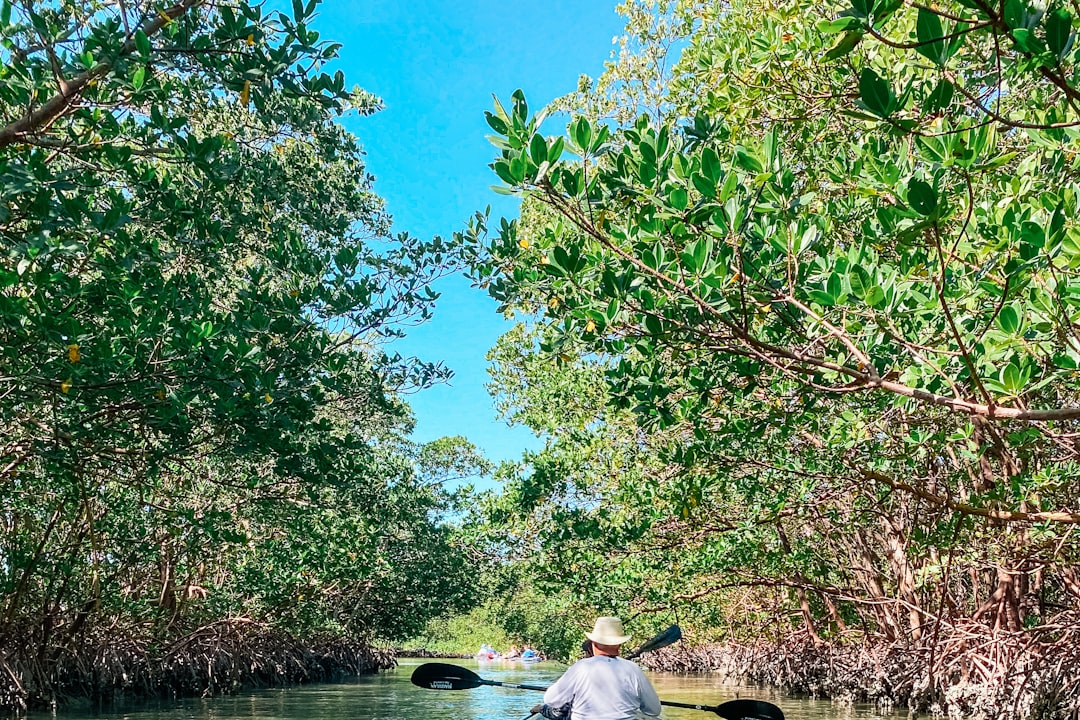
What makes it great: The mangrove tunnels are atmospheric — narrow channels through arching mangrove roots with fish darting beneath you. It's quiet, shaded, and feels like a secret despite being in the middle of a major city. Manatees occasionally enter the mangrove channels during cooler months.
Rental: No on-site rentals. Bring your own or rent from a nearby outfitter (Sweetwater Kayaks and others operate nearby).
Tides matter: The mangrove tunnels become very shallow at low tide and potentially impassable. Check tide charts and plan to paddle during incoming or high tide.
What's the Paddling Scene at Fort De Soto?
Fort De Soto Park in southern Pinellas County is a paddling hub with multiple options depending on your skill level and interests.
Options:
- Sheltered bay side — Calm water between the park islands, perfect for beginners and SUP
- Open Gulf side — More exposed, better for experienced paddlers. Beautiful but watch for wind and boat traffic
- Shell Key crossing — Intermediate paddlers can cross to Shell Key Preserve (see above)
- Mangrove channels — Short mangrove paddle routes within the park
Launch: Multiple launch points throughout the park. The main boat ramp area has the most parking and closest access to calm water.
Rentals: On-site rentals are available seasonally ($30-$50 for 2 hours). Multiple outfitters also operate guided tours from the park.
What Makes Emerson Point Preserve Special?
Emerson Point Preserve sits at the western tip of the Manatee River in Manatee County, where the river meets Tampa Bay. It's a hidden gem for paddling.
What to expect:
- Launch into the Manatee River and paddle along mangrove-lined shores
- The confluence of the river and bay creates diverse ecosystems — you might see dolphins, manatees, and sea turtles in the same paddle
- The preserve itself has hiking trails, shell mounds (Native American archaeological sites), and picnic areas
- Less crowded than Pinellas County paddling spots
Launch: Free kayak/canoe launch at the preserve. Limited parking — arrive early on weekends.
Conditions: The Manatee River mouth can have strong tidal currents. Check conditions and paddle during slack tide if you're not comfortable with current.
What Season Is Best for Paddling in Tampa Bay?
Peak paddling season: October through May
- Cooler air temperatures (60s-80s)
- Lower humidity
- Manatee season (November-March) for spring-fed rivers
- Less afternoon thunderstorm risk
- Calmer wind conditions (generally)
Summer paddling (June-September):
- Launch early — be on the water by 7 AM
- Afternoon thunderstorms are daily. Plan to be off the water by 1-2 PM
- Lightning on open water is genuinely dangerous — this isn't something to take lightly
- Water temperatures are bathwater-warm (85-90 degrees)
- Fewer manatees in the springs (they disperse to open water when it's warm)
- Pro: Fewer crowds on weekdays
Wind conditions: Check wind forecasts before any open-water paddle. Tampa Bay can get choppy with 15+ mph winds, making SUP miserable and kayaking challenging. The sheltered options (Weeki Wachee River, mangrove tunnels at Weedon Island and Caladesi) are more wind-protected.
What About Rentals and Gear?
If you don't own your own equipment, Tampa Bay has plenty of rental options:
Major rental/outfitter companies:
- Sweetwater Kayaks — Multiple Pinellas County locations
- Canoe Outpost — Hillsborough River specialists
- Paddling Adventures — Weeki Wachee River
- Get Up and Go Kayaking — Guided clear kayak tours in various locations
- Beach Bum Paddlesports — St. Pete Beach area
Typical rental costs:
- Single kayak: $30-$50 for 2-3 hours, $50-$75 full day
- Tandem kayak: $50-$70 for 2-3 hours
- Stand-up paddleboard: $30-$50 for 2 hours
- Guided tours: $50-$85 per person (usually 2-3 hours, includes equipment and instruction)
If you're buying your own:
- Costco and local shops carry entry-level inflatable SUPs for $300-$500
- Used kayaks on Facebook Marketplace regularly go for $200-$500
- Storage is the main challenge — if you don't have garage space, look into kayak storage racks for your yard or a nearby marina with dry storage
Frequently Asked Questions
Do I need experience to kayak or paddleboard in Tampa Bay?
Not for the sheltered options. Weeki Wachee River, mangrove trails at Weedon Island and Caladesi, and the calm bay side of Fort De Soto are all beginner-friendly. Open water crossings (to Shell Key or Caladesi Island) require basic paddling competence and awareness of tides and boat traffic. Most rental outfitters offer quick instruction for first-timers.
When is the best time to see manatees while paddling?
November through March, when water temperatures drop and manatees seek warm water. Weeki Wachee Springs is the most reliable spot — you're almost guaranteed to see manatees during these months. The Hillsborough River and Tampa Bay mangrove areas also have manatee sightings during cooler periods.
Are there alligators in Tampa Bay kayaking areas?
Yes, in freshwater areas. The Hillsborough River has a significant alligator population. Weeki Wachee River has some. Coastal/saltwater areas (Caladesi, Shell Key, Fort De Soto) have crocodiles very rarely — they exist in Tampa Bay but encounters are extremely uncommon. Alligators generally ignore kayaks and paddleboards. Don't approach them, don't feed them, and give nesting females a wide berth.
Can you paddleboard in Tampa Bay year-round?
Yes. Water temperatures stay above 60 degrees even in winter, and air temperatures rarely drop below the 50s. Summer paddling is best done early morning to avoid afternoon storms. The only days you should skip are during high wind advisories (15+ mph sustained) or active thunderstorms.
Do I need a life jacket to kayak in Florida?
Florida law requires one US Coast Guard-approved life jacket per person in the vessel. Children under 6 must wear their life jacket at all times while on a vessel. Adults are not required to wear them on kayaks or SUPs, but you must have them accessible. Wearing one is strongly recommended, especially on open water crossings.
Free Tampa Bay Relocation Guide
Get personalized neighborhood recommendations, cost comparisons, and insider tips from Barrett Henry — 23+ years of real estate experience.
Moving to Tampa Bay? Get a Local Expert.
Barrett Henry is a Broker Associate with REMAX Collective and over 24 years of real estate experience. Straight talk, smart strategy, no pressure.
Need Help Setting Up Your New Home?
Best Bay Services handles handyman work, home repairs, and maintenance for your new Tampa Bay home. Local, licensed, and trusted.
Keep Reading
Cost of Living in Tampa Bay: Comparing Lutz, Tarpon Springs, and Beyond
Compare housing, taxes, and expenses across Tampa Bay neighborhoods. Real insights on Lutz, Tarpon Springs, Channelside, and Hernando County.
May 10, 2026
Moving to Tampa Bay: Planning Your Relocation Across Hillsborough County
Expert moving guide for Tampa Bay relocation. Tips for Trinity, Winter Haven, Spring Hill, and Homosassa. By Barrett Henry, REALTOR®.
May 10, 2026
Tarpon Springs vs Tampa vs Channelside vs St. Petersburg: Where Should You Move?
Compare Tarpon Springs, Tampa, Channelside, and St. Petersburg. Find your ideal Tampa Bay neighborhood with this honest breakdown.
May 10, 2026
Questions & Answers
Have a question about this topic? Ask below and the community will help.
Sign in to ask or answer questions